A well-designed yard can dramatically improve the beauty, comfort, and value of any home. Modern homeowners are no longer treating their outdoor spaces as simple lawns or unused areas. Instead, they are transforming yards into functional extensions of their homes where they can relax, entertain guests, enjoy nature, and spend quality time with family.
Creating a smart yard is not necessarily about expensive landscaping projects or large-scale renovations. The most successful outdoor spaces are built through thoughtful planning, strategic design choices, and practical improvements that enhance both functionality and appearance. From selecting the right plants and installing outdoor lighting to creating relaxation zones and improving storage, every upgrade contributes to a more attractive and useful yard.
This complete guide on decadgarden yard tips by decoratoradvice explores modern yard design ideas, landscaping strategies, outdoor living solutions, and practical improvement tips that can help homeowners create a stylish and efficient outdoor environment.
Why Smart Yard Design Matters
Smart yard design goes beyond appearance. A thoughtfully planned outdoor space improves comfort, supports outdoor activities, and enhances overall property value.
A smart yard provides:
- Better outdoor functionality
- Increased home appeal
- Improved organization
- More entertainment opportunities
- Enhanced relaxation spaces
When a yard is properly designed, it becomes a valuable part of everyday living rather than simply an area surrounding the home.
Benefits of Upgrading Your Outdoor Space
Investing in outdoor improvements offers several advantages.
- Increased Property Value: Well-maintained landscaping often attracts buyers and improves market value.
- Better Outdoor Living: Functional yards provide additional space for relaxation and recreation.
- Enhanced Curb Appeal: An attractive yard creates a strong first impression.
- Improved Mental Wellbeing: Natural environments help reduce stress and encourage relaxation.
- Greater Family Enjoyment: Outdoor spaces create opportunities for gatherings and activities.
Modern Trends in Yard Landscaping
Homeowners today are embracing landscaping trends that balance beauty and practicality.
Popular trends include:
- Sustainable Landscaping: Using eco-friendly materials and water-saving techniques.
- Outdoor Living Areas: Creating spaces for dining, lounging, and entertainment.
- Native Plant Gardens: Reducing maintenance while supporting local ecosystems.
- Smart Lighting Systems: Improving nighttime usability and safety.
- Minimalist Designs: Focusing on clean lines and organized layouts.
These trends create yards that are both attractive and functional.
Understanding Your Yard Space
Before beginning any yard improvement project, it is important to understand the existing outdoor environment.
Consider factors such as:
- Available space
- Sunlight exposure
- Soil conditions
- Drainage patterns
- Existing structures
- Privacy requirements
A thorough assessment helps guide better design decisions.
Evaluating Available Outdoor Areas
Every yard has unique opportunities and limitations.
Evaluate:
- Open Lawn Areas: Suitable for recreation and landscaping.
- Shaded Sections: Ideal for seating areas or shade-loving plants.
- Patios and Decks: Useful for outdoor entertaining.
- Unused Corners: Potential locations for storage or decorative features.
Understanding these areas allows homeowners to maximize available space.
Measuring and Planning Your Yard
Accurate measurements help avoid design mistakes.
Measure:
- Total yard dimensions
- Patio sizes
- Walkway widths
- Planting zones
- Seating areas
Creating a simple layout plan helps organize future improvements.
Identifying Functional Zones
Dividing the yard into zones improves usability.
Examples include:
- Relaxation Zone: A comfortable space for unwinding.
- Dining Zone: An area for outdoor meals.
- Garden Zone: Dedicated planting areas.
- Entertainment Zone: Spaces for gatherings and social activities.
Functional zones create structure and purpose.
Decadgarden yard tips by decoratoradvice
Creating a smart yard involves balancing aesthetics with practicality. The best outdoor spaces combine landscaping, furniture, lighting, and organization to create a welcoming environment.
Focus on:
- Comfort
- Functionality
- Sustainability
- Easy maintenance
- Visual appeal
Small improvements made consistently often deliver the greatest results.
Creating a Stylish and Functional Yard
A successful yard should be attractive and easy to use.
- Use Consistent Design Elements: Maintain a cohesive look.
- Add Comfortable Seating: Encourage outdoor enjoyment.
- Incorporate Greenery: Plants soften hard surfaces.
- Improve Organization: Reduce clutter through smart storage.
Style and function should always work together.
Smart Improvements for Outdoor Living
Outdoor living spaces continue to grow in popularity.
Consider upgrades such as:
- Outdoor kitchens
- Fire pits
- Pergolas
- Covered patios
- Outdoor dining spaces
These features increase comfort and usability.
Easy Ways to Refresh Your Landscape
Refreshing a yard does not always require major renovations.
Simple improvements include:
- Adding Fresh Mulch: Creates a clean appearance.
- Trimming Plants: Improves organization.
- Updating Planters: Adds visual interest.
- Installing New Lighting: Enhances atmosphere.
- Repainting Outdoor Furniture: Provides an affordable makeover.
Small changes can make a significant difference.
Planning a Smart Yard Layout
A smart layout improves movement and functionality.
Consider:
- Traffic flow
- Seating placement
- Plant locations
- Storage areas
A well-planned layout creates balance and convenience.
Open vs Zoned Yard Designs
- Open Layouts: Provide spaciousness and flexibility.
- Zoned Layouts: Separate activities into dedicated areas.
Both approaches can work depending on yard size and homeowner needs.
Maximizing Small Yard Spaces
Small yards require strategic planning.
Tips include:
- Using vertical gardens
- Choosing compact furniture
- Installing wall planters
- Creating multi-functional spaces
Even limited areas can feel spacious with thoughtful design.
Designing for Comfort and Functionality
Comfort should guide every outdoor improvement.
Consider:
- Shade options
- Comfortable seating
- Convenient pathways
- Accessible layouts
Practical designs encourage regular use.
Choosing the Best Plants for Your Yard
Plant selection influences both appearance and maintenance requirements.
Choose plants based on:
- Climate compatibility
- Sunlight needs
- Water requirements
- Growth habits
The right plants support long-term success.
Low-Maintenance Plant Options
Low-maintenance plants reduce gardening effort.
Popular choices include:
- Lavender
- Succulents
- Ornamental grasses
- Aloe vera
- Juniper shrubs
These options remain attractive with minimal care.
Native Plants for Easy Care
Native plants adapt naturally to local conditions.
Benefits include:
- Lower water needs
- Better pest resistance
- Reduced maintenance
They are excellent choices for sustainable landscaping.
Adding Color with Seasonal Flowers
Seasonal flowers keep landscapes vibrant.
Examples:
- Spring: Tulips and daisies.
- Summer: Sunflowers and marigolds.
- Autumn: Chrysanthemums and asters.
Colorful blooms enhance visual appeal throughout the year.
Landscaping Ideas for Modern Yards
Modern landscaping focuses on simplicity and structure.
Popular elements include:
- Geometric shapes
- Clean borders
- Minimal plant clutter
- Functional spaces
These features create a polished appearance.
Contemporary Landscape Designs
Contemporary designs emphasize:
- Balance
- Simplicity
- Open space
- Natural materials
Modern landscapes often feel elegant and organized.
Using Grass, Stone, and Mulch
Combining materials creates texture and contrast.
- Grass: Provides greenery.
- Stone: Adds durability and visual interest.
- Mulch: Improves plant health and appearance.
Together, these materials create balanced landscapes.
Creating Visual Balance Outdoors
Balance is essential in yard design.
Achieve balance through:
- Symmetrical planting
- Even furniture placement
- Consistent colors
Balanced yards feel more organized and attractive.
Smart Pathways and Walkways
Pathways improve accessibility and guide movement.
Benefits include:
- Better navigation
- Enhanced safety
- Visual structure
Well-designed walkways improve overall functionality.
Decorative Stone Path Ideas
Stone pathways create timeless appeal.
Popular options include:
- Flagstone
- River rock
- Gravel pathways
Stone materials complement natural landscapes.
Modern Walkway Materials
Modern walkway materials include:
- Concrete pavers
- Porcelain tiles
- Natural stone
- Brick
Each material offers unique advantages.
Improving Accessibility and Style
Walkways should be practical and attractive.
Ensure paths are:
- Wide enough for comfortable movement
- Well-lit
- Durable
Accessibility improves user experience.
Outdoor Seating and Relaxation Areas
Seating areas encourage outdoor enjoyment.
Popular options include:
- Lounge chairs
- Benches
- Sectional seating
- Hammocks
Comfortable seating transforms yards into living spaces.
Creating Comfortable Lounge Spaces
Comfortable lounges require:
- Cushions
- Shade
- Convenient layouts
Relaxation areas should feel welcoming and peaceful.
Choosing Durable Outdoor Furniture
Outdoor furniture should withstand weather conditions.
Recommended materials:
- Aluminum
- Teak
- Resin wicker
- Powder-coated steel
Durable furniture provides long-term value.
Shade Solutions for Hot Days
Shade improves comfort significantly.
Popular options include:
- Pergolas
- Umbrellas
- Shade sails
- Covered patios
Protection from direct sunlight encourages outdoor use.
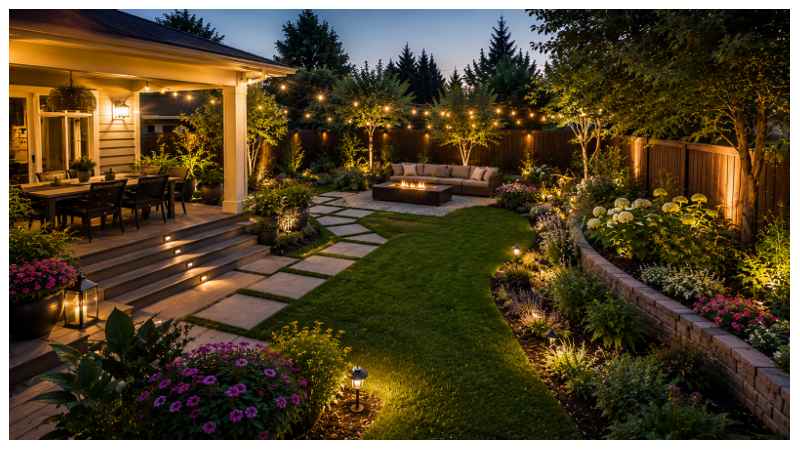
Outdoor Lighting Ideas
Lighting extends yard usability after sunset.
Benefits include:
- Safety
- Security
- Ambiance
Layered lighting provides the best results.
Solar Lighting Solutions
Solar lighting offers:
- Energy efficiency
- Easy installation
- Low maintenance
Pathway and Garden Lights
Pathway lighting improves navigation and aesthetics.
Common options include:
- LED stake lights
- Lantern-style fixtures
- Recessed pathway lights
Well-lit paths create a welcoming atmosphere.
Decorative Lighting for Ambiance
Decorative lighting enhances mood.
Examples include:
- String lights
- Hanging lanterns
- Wall sconces
Warm lighting creates inviting outdoor spaces.
Backyard Entertainment Features
Entertainment features improve functionality.
Popular additions include:
- Outdoor kitchens
- Fire pits
- Dining areas
- Seating lounges
These features encourage social interaction.
Outdoor Dining Area Ideas
Outdoor dining spaces should include:
- Durable furniture
- Adequate shade
- Convenient lighting
Dining areas make outdoor meals more enjoyable.
Fire Pit Design Inspiration
Fire pits provide warmth and ambiance.
Options include:
- Stone fire pits
- Modern gas fire tables
- Portable fire bowls
They create gathering points for family and friends.
Creating Spaces for Gatherings
Gathering areas should support conversation and comfort.
Arrange seating to encourage interaction.
Provide lighting and shade where necessary.
Budget-Friendly Yard Improvements
Improving a yard does not require a large budget.
Focus on:
- DIY projects
- Affordable décor
- Strategic upgrades
Small investments often deliver impressive results.
Affordable Landscaping Upgrades
Budget-friendly upgrades include:
- Mulching
- New plants
- Garden edging
- Decorative stones
These improvements enhance appearance without high cost.
DIY Yard Enhancement Projects
DIY projects allow customization.
Ideas include:
- Raised garden beds
- Handmade planters
- Pallet furniture
DIY upgrades add personality.
Repurposing Old Outdoor Items
Reuse existing materials creatively.
Examples:
- Old ladders as plant displays
- Wooden crates as storage
- Repurposed tables as potting stations
Repurposing supports sustainability and savings.
Water Features and Garden Decor
Decorative elements increase visual interest.
Popular features include:
- Fountains
- Garden statues
- Decorative pots
These additions enhance the atmosphere.
Small Fountain Ideas
Small fountains fit most yards.
Options include:
- Wall fountains
- Solar fountains
- Tiered water features
Water sounds create a calming environment.
Decorative Planters and Pots
Stylish planters improve landscaping.
Choose containers that complement the overall design.
Mix sizes for visual variety.
Creating a Relaxing Atmosphere
Relaxation is a key goal of modern yard design.
Use:
- Soft lighting
- Comfortable seating
- Natural greenery
- Water features
These elements encourage peace and comfort.
Eco-Friendly Yard Solutions
Sustainability is increasingly important.
Eco-friendly yards reduce environmental impact while lowering maintenance costs.
Water Conservation Techniques
Save water through:
- Drip irrigation
- Mulching
- Drought-tolerant plants
Conservation supports long-term sustainability.
Sustainable Landscaping Practices
Sustainable practices include:
- Composting
- Native plant use
- Reduced chemical usage
These methods benefit both gardens and the environment.
Organic Gardening Methods
Organic gardening relies on natural techniques that promote healthy plant growth while maintaining soil quality and environmental balance.
Storage and Organization for Outdoor Spaces
Organization improves appearance and convenience.
Well-planned storage reduces clutter and protects equipment.
Organizing Garden Tools
Use:
- Tool racks
- Storage sheds
- Wall hooks
Proper organization improves efficiency.
Hidden Storage Solutions
Hidden storage options include:
- Storage benches
- Deck boxes
- Built-in compartments
These solutions maximize available space.
Multi-Purpose Outdoor Furniture
Furniture with storage offers added functionality.
Examples include:
- Storage benches
- Convertible tables
- Hidden compartment seating
Multi-purpose furniture is ideal for smaller yards.
Common Yard Design Mistakes to Avoid
Avoiding common mistakes saves time and money.
Good planning leads to better long-term results.
Overcrowding Outdoor Spaces
Too many features can make a yard feel cramped.
Maintain open areas for balance and movement.
Ignoring Maintenance Requirements
Choose features that match your available maintenance time.
Overly demanding landscapes can become difficult to manage.
Poor Plant Selection Choices
Selecting unsuitable plants often leads to poor growth and increased maintenance.
Research plant requirements before purchasing.
Seasonal Yard Maintenance Tips
Seasonal care keeps yards attractive and healthy throughout the year.
Spring Yard Preparation
Spring tasks include:
- Cleaning debris
- Preparing soil
- Planting flowers
Proper spring preparation lays the foundation for strong, vibrant, and productive garden growth throughout the season.
Summer Yard Care
Warm weather requires regular watering, trimming, and monitoring to keep plants healthy and vibrant.
Winter Protection Strategies
Protect plants during colder months by covering sensitive vegetation and reducing unnecessary watering.
Increasing Property Value with Smart Yard Upgrades
Outdoor improvements can significantly boost property value.
Buyers appreciate attractive and functional outdoor spaces.
Landscaping Improvements That Add Value
Valuable upgrades include:
- Professional landscaping
- Outdoor lighting
- Patios
- Functional seating areas
These improvements often provide strong returns.
Enhancing Curb Appeal
Curb appeal creates lasting first impressions.
Maintain:
- Healthy lawns
- Clean pathways
- Attractive plantings
Strong curb appeal attracts attention.
Outdoor Features Buyers Love
Popular buyer-friendly features include:
- Outdoor kitchens
- Fire pits
- Modern landscaping
- Covered patios
These additions increase property appeal.
Conclusion
Smart yard design combines beauty, comfort, functionality, and sustainability. By following these decadgarden yard tips by decoratoradvice, homeowners can transform ordinary outdoor areas into inviting spaces that support relaxation, entertainment, and everyday enjoyment.
From landscaping improvements and lighting upgrades to smart storage solutions and eco-friendly gardening practices, every thoughtful improvement contributes to a more valuable and enjoyable outdoor environment.
Final Thoughts on Smart Yard Design
The best yard designs focus on long-term usability, easy maintenance, and visual harmony. Small upgrades made strategically can produce impressive results over time.
Building a Beautiful and Functional Outdoor Space
Creating an attractive outdoor area is not about following every trend. It is about designing a yard that reflects your lifestyle while providing comfort, beauty, and functionality for years to come.
FAQs
What are the easiest yard upgrades?
Fresh mulch, outdoor lighting, and updated planters are among the easiest improvements.
Which plants are best for low-maintenance yards?
Lavender, succulents, ornamental grasses, and native plants are excellent options.
How can I improve a small yard?
Use vertical gardens, compact furniture, and multi-functional features to maximize space.
What outdoor lighting works best?
Solar pathway lights, LED fixtures, and decorative string lights are popular choices.
How often should a yard be maintained?
Basic maintenance should be performed weekly, while seasonal tasks should be completed throughout the year.