A beautiful garden can transform the way a home looks and feels. It can provide a peaceful place to relax, an enjoyable area for family activities, and an attractive outdoor setting for guests. However, creating a successful garden is not simply about planting as many flowers as possible. Good garden design combines planning, suitable plants, practical layouts, comfortable spaces, and regular maintenance.
The decoradhouse garden tips by decoratoradvice approach focuses on practical improvements that work for different garden sizes and budgets. From choosing plants and improving lawn health to adding lighting and outdoor seating, thoughtful changes can make an ordinary yard more attractive and useful.
Why Garden Improvement Matters
Garden improvement can increase outdoor comfort while making the entire property look more cared for. A well-planned garden also helps homeowners use outdoor space more effectively. Simple improvements such as defined pathways, healthy plants, proper lighting, and organized seating can make a noticeable difference.
A garden should not only look attractive during one season. Choosing durable materials and suitable plants can create a space that remains useful and appealing throughout the year.
Benefits of a Beautiful Garden
A beautiful garden offers several advantages. Greenery can create a relaxing atmosphere, while flowers introduce color and personality. Trees and shrubs can provide shade and privacy, and outdoor seating can turn a garden into an extension of the living area.
Good landscaping can also improve curb appeal and potentially support property value. Most importantly, a thoughtfully designed garden gives homeowners a comfortable place to enjoy nature.
Creating a Garden That Fits Your Lifestyle
Before making changes, consider how you actually want to use the garden. Families may need open areas for children, while homeowners who enjoy entertaining may prefer patios and dining spaces. Others might want a quiet corner for reading or gardening.
Design your outdoor space around your daily activities rather than copying another garden.
Understanding Your Garden Space
Every garden has different conditions. Size, sunlight, soil, drainage, climate, and existing structures all affect what will work successfully.
Assessing Sunlight and Soil
Observe which areas receive full sunlight, partial shade, or little direct light. Plants should be selected according to these conditions. Soil quality also matters because poor drainage or compacted soil can prevent healthy growth.
Simple soil improvements, such as adding suitable organic matter, can help create better growing conditions.
Measuring Your Outdoor Area
Measure the garden before purchasing plants, furniture, paving, or decorative features. Knowing the available dimensions helps prevent overcrowding and unnecessary spending.
Create a basic sketch showing existing trees, fences, buildings, pathways, and other permanent features.
Identifying Garden Needs
Look at what your garden currently lacks. It may need more privacy, better seating, additional storage, improved drainage, colorful planting, or better lighting.
Identifying these needs makes your improvement plan more focused.
Planning Before Planting
Avoid buying plants simply because they look attractive at a garden center. Check their expected size, sunlight requirements, maintenance needs, and compatibility with your outdoor conditions.
Planning first can prevent overcrowding and reduce future maintenance.
Decoradhouse garden tips by decoratoradvice
Easy Garden Improvement Ideas
Fresh mulch, trimmed plants, attractive pots, clean pathways, and new outdoor lighting can refresh a garden without major construction. Painting an old fence, replacing damaged planters, or adding a small seating area can also create an immediate visual improvement.
Smart Garden Planning Tips
Divide the garden into functional zones. For example, create separate areas for planting, seating, entertaining, and storage.
Keep frequently used areas easy to access and place higher-maintenance plants where they are convenient to care for.
Creating a Stylish and Functional Outdoor Space
Use a consistent combination of materials and colors. Wood, stone, greenery, and neutral furniture can create a natural appearance without making the garden feel overly decorated.
Leave enough open space for movement and everyday activities.
Garden Design Ideas
Choosing the Right Garden Layout
A formal layout can provide symmetry and structure, while a natural design can create a relaxed appearance. The best choice depends on the property’s architecture and your personal preferences.
Creating Attractive Planting Zones
Group plants according to their sunlight, water, and maintenance requirements. Layering taller plants behind shorter varieties can create depth and make flower beds more visually interesting.
Balancing Plants and Open Space
Too many plants can make a garden feel crowded. Combine planted areas with lawns, pathways, patios, or decorative gravel to create visual breathing room.
Adding Paths and Garden Borders
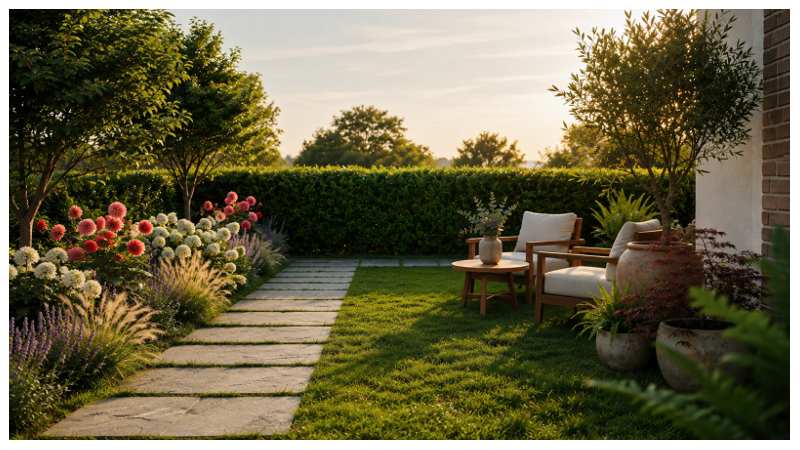
Pathways improve accessibility while adding structure. Stone, brick, gravel, or concrete can be used depending on the desired style. Defined borders also make planting areas easier to maintain.
Choosing the Right Plants
Low-Maintenance Plants
For easier garden care, choose plants that suit your local growing conditions and require limited pruning or watering. Hardy shrubs, suitable ground covers, and climate-appropriate perennials can reduce maintenance.
Native Plants for Easy Care
Plants native to your region are often a smart choice because they naturally thrive in the local climate and growing conditions. They can also support local wildlife and may require less specialized care.
Seasonal Flowers and Color
Use flowers with different blooming periods to maintain visual interest throughout the year. Combining seasonal flowers with permanent shrubs and foliage creates a more balanced garden.
Choosing Plants for Different Sunlight Levels
Full-sun plants should be placed in bright areas, while shade-tolerant varieties are better suited to covered spaces. Matching plants to available light is one of the simplest ways to encourage healthier growth.
Lawn and Landscape Care
Improving Lawn Health
Regular mowing, appropriate watering, soil care, and removal of weeds can help maintain a healthier lawn. Avoid cutting grass excessively short, as this can place unnecessary stress on the plants.
Mulching for Better Plant Growth
Mulch helps cover exposed soil around plants and can support moisture retention. Organic mulch can also contribute nutrients as it gradually breaks down.
Simple Landscaping Techniques
Use layers of plants, contrasting textures, and clearly defined borders to create a more polished landscape. Even a small garden can benefit from thoughtful structure.
Maintaining Clean Garden Edges
Garden Decoration Ideas
Decorative Pots and Planters
Containers allow homeowners to add plants to patios, balconies, entrances, and small gardens. Select pots that complement the overall outdoor design.
Garden Statues and Accessories
Small decorative features can create focal points. Avoid using too many accessories because excessive decoration can make outdoor spaces appear cluttered.
Using Natural Materials
Stone, wood, clay, and natural fibers can blend easily with plants and landscaping. These materials help create a warm outdoor atmosphere.
Creating Attractive Focal Points
A fountain, large planter, tree, sculpture, or seating area can become the garden’s main visual feature. Place focal points where they can be easily noticed.
Outdoor Seating Ideas
Creating a Relaxing Garden Corner
A small bench or comfortable chair beneath a tree or near flowering plants can create a peaceful retreat.
Choosing Weather-Resistant Furniture
Outdoor furniture should be selected according to local weather conditions. Materials designed for outdoor use generally require less maintenance and last longer.
Small Garden Seating Solutions
Compact benches, folding chairs, and multi-purpose furniture work well in limited spaces. Avoid oversized furniture that blocks pathways.
Adding Shade and Privacy
Pergolas, umbrellas, screens, trees, and tall plants can provide shade and create greater privacy for outdoor seating areas.
Garden Lighting Tips
Solar Garden Lights
Solar fixtures can provide simple illumination without requiring complicated wiring. They work particularly well along pathways and around planting beds where sufficient sunlight is available during the day.
Pathway Lighting
Pathway lights improve visibility and help define walking routes after dark. Position them carefully so they illuminate the path without producing excessive glare.
Highlighting Plants and Features
Use focused lighting to emphasize trees, decorative plants, fountains, walls, or architectural details.
Creating a Relaxing Evening Atmosphere
Soft, carefully positioned lighting can make outdoor areas feel comfortable in the evening. Combine practical lighting with decorative fixtures for a balanced effect.
Budget-Friendly Garden Improvements
Affordable Garden Upgrades
Refreshing mulch, repainting fences, reorganizing plants, and adding inexpensive containers can create significant improvements without major costs.
Easy DIY Garden Projects
Simple projects include creating raised planting beds, painting planters, building basic garden shelves, or making decorative borders.
Reusing Old Items as Garden Decor
Old containers, wooden furniture, crates, and other suitable household items can sometimes be repurposed into planters or decorative features.
Saving Money on Plants and Materials
Buy plants according to your actual needs rather than purchasing too wide a variety. Propagating suitable plants and comparing material prices can also reduce expenses.
Eco-Friendly Gardening Tips
Water-Saving Gardening
Water plants according to their needs and consider methods that reduce unnecessary evaporation. Mulching can help soil retain moisture.
Composting and Natural Fertilizers
Compost made from suitable organic materials can improve soil structure and provide nutrients. It also gives useful household garden waste a second purpose.
Avoiding Excessive Chemicals
Use chemical treatments carefully and only when necessary. Integrated approaches such as proper plant selection, cleanliness, and natural pest-management methods can support healthier gardens.
Sustainable Garden Materials
Choose durable, reusable, recycled, or responsibly sourced materials whenever practical. Choosing durable materials helps minimize replacements and keeps maintenance costs lower over time.
Seasonal Garden Maintenance
Spring Garden Preparation
Spring is a useful time to clean planting beds, inspect plants, prepare soil, remove damaged growth, and plan new seasonal planting.
Summer Garden Care
During warmer months, monitor soil moisture, remove weeds, trim plants when appropriate, and watch for signs of heat stress or pests.
Autumn Garden Cleanup
Remove unhealthy plant material, clean garden tools, clear fallen leaves where necessary, and prepare vulnerable plants for colder conditions.
Winter Plant Protection
Protect plants that are sensitive to cold using appropriate coverings or sheltered locations. Avoid unnecessary disturbance of dormant plants.
Common Garden Mistakes to Avoid
Choosing the Wrong Plants
Plants that cannot tolerate your garden’s sunlight, soil, or climate may struggle regardless of how much care they receive.
Overwatering Your Garden
Too much water can damage roots and create conditions that encourage plant problems. Water according to plant requirements and local conditions.
Ignoring Sunlight Requirements
Placing shade-loving plants in strong sunlight or sun-loving plants in deep shade can lead to poor growth.
Overcrowding Planting Areas
Plants need adequate space to grow. Follow recommended spacing and consider their mature size rather than their current appearance.
Creating a Modern Garden
Contemporary Landscaping Ideas
Modern gardens often use clean lines, simple planting schemes, geometric pathways, and carefully selected materials.
Minimalist Garden Design
A minimalist garden focuses on fewer elements, open space, and a restrained color palette. This can make maintenance easier while creating a sophisticated appearance.
Combining Plants, Stone, and Wood
Combining natural textures creates visual contrast. Green plants can soften hard stone surfaces, while wood adds warmth.
Making Small Gardens Feel Larger
Use vertical planting, mirrors where appropriate, light-colored materials, and clearly defined zones to make limited spaces feel more open.
Increasing Home Value with Garden Improvements
Improving Curb Appeal
A clean entrance, healthy landscaping, attractive planting, and well-maintained pathways create a stronger first impression.
Creating Attractive Outdoor Living Areas
Patios, seating areas, lighting, and functional landscaping can make outdoor space more useful to homeowners and potential buyers.
Low-Maintenance Landscaping Features
Durable pathways, suitable plants, efficient irrigation, and simple planting designs can appeal to people who want attractive outdoor spaces without excessive maintenance.
Outdoor Features Buyers Appreciate
Well-maintained gardens, practical patios, privacy features, quality lighting, and attractive landscaping can make a property more appealing.
Conclusion
A successful garden does not depend on having a large budget or a huge outdoor area. Careful planning, appropriate plants, practical furniture, thoughtful lighting, and regular maintenance can transform almost any garden.
The decoradhouse garden tips by decoratoradvice approach encourages homeowners to focus on improvements that combine appearance with everyday usefulness. By working gradually and selecting solutions that fit your space, you can create an outdoor environment that remains enjoyable for years.
Final Thoughts on decoradhouse garden tips by decoratoradvice
The best garden is one that matches your lifestyle, available space, and maintenance preferences. Start with the basics, improve problem areas, and gradually introduce decorative features. A balanced approach can produce an outdoor space that feels natural, organized, and welcoming.
Creating a Beautiful and Practical Garden
Beauty and practicality should work together. Healthy plants, comfortable seating, accessible pathways, useful lighting, and organized planting areas can turn your garden into an extension of your home.
FAQs
What are the easiest ways to improve a garden?
Start with simple improvements such as cleaning the space, trimming overgrown plants, adding mulch, refreshing containers, improving pathways, and installing suitable outdoor lighting.
Which plants are easiest for beginners?
Begin with hardy plants that are well suited to your local climate and available sunlight. Native or low-maintenance varieties are often practical choices for beginners.
How can I improve my garden on a budget?
Reuse existing materials, choose affordable plants, complete small DIY projects, refresh old furniture, and focus on high-impact areas such as entrances and seating spaces.
What garden lighting is best?
The best lighting depends on its purpose. Solar lights can work well for simple pathways and garden beds, while brighter fixtures may be appropriate for entrances, stairs, or outdoor activity areas.
How often should a garden be maintained?
Maintenance depends on the plants, climate, and garden size. Regularly check the garden for weeds, watering needs, damaged growth, pests, and general cleanliness rather than relying on one fixed schedule.