Smart home ideas involve using connected technology to make everyday household activities easier, more convenient, secure, and efficient. These solutions can range from simple smart bulbs and plugs to advanced systems that connect lighting, security, climate control, entertainment, and appliances.
The concept behind decoradtech smart home ideas by decoratoradvice is not simply filling a property with technology. Instead, smart devices should have a practical purpose and fit naturally into the way a household operates. The right setup can reduce repetitive tasks, improve control, and create a more comfortable living environment.
1. Why Smart Technology Matters Today
Technology has become an increasingly useful part of modern home design. Homeowners want convenient ways to control household systems while also paying attention to energy use, security, and comfort.
Smart technology can provide remote access, automated schedules, notifications, and customized settings. These features allow homeowners to manage certain aspects of their properties more efficiently.
How Smart Technology Can Improve Everyday Living
Smart devices can simplify routines that would otherwise require manual attention. Lighting can follow a schedule, a thermostat can adjust according to preferences, and security devices can send alerts when activity is detected.
The key is choosing technology that solves real problems. A smaller collection of useful devices can often provide more value than a complicated system filled with features that rarely get used.
2. Understanding Smart Home Technology
How Smart Home Systems Work
Smart home systems typically connect devices through a home network and allow users to control them through applications, voice commands, schedules, or centralized platforms.
Some devices operate independently, while others can communicate with multiple products. Understanding how each system connects is important before purchasing equipment.
Connected Devices and Home Automation
Connected devices can work together to create automated routines. For example, a homeowner might create a routine that adjusts lights and other compatible devices at a particular time.
Automation reduces repetitive actions and can make household management more consistent.
Choosing Technology for Your Home
Before buying smart devices, consider the size of the property, existing equipment, network reliability, budget, and actual household requirements.
Technology should complement the home rather than create unnecessary complexity.
3. Decoradtech smart home ideas by decoratoradvice
Practical Smart Home Solutions
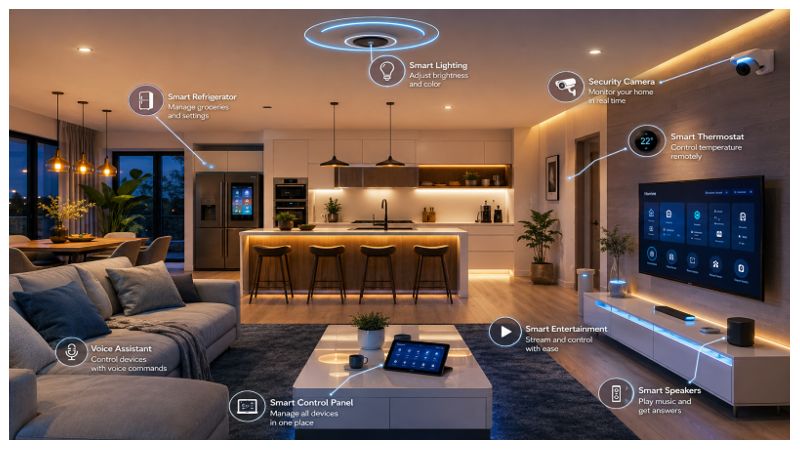
Practical smart home solutions focus on convenience, security, efficiency, and comfort. Smart lighting, connected locks, sensors, thermostats, cleaning devices, and entertainment systems are common examples.
The best choice depends on what the homeowner wants to improve.
Creating a Connected Living Environment
A connected home can bring several household functions under convenient digital control. However, compatibility is essential when combining devices from different manufacturers or ecosystems.
Starting with a small number of compatible products makes it easier to build a reliable system.
Balancing Technology With Comfort
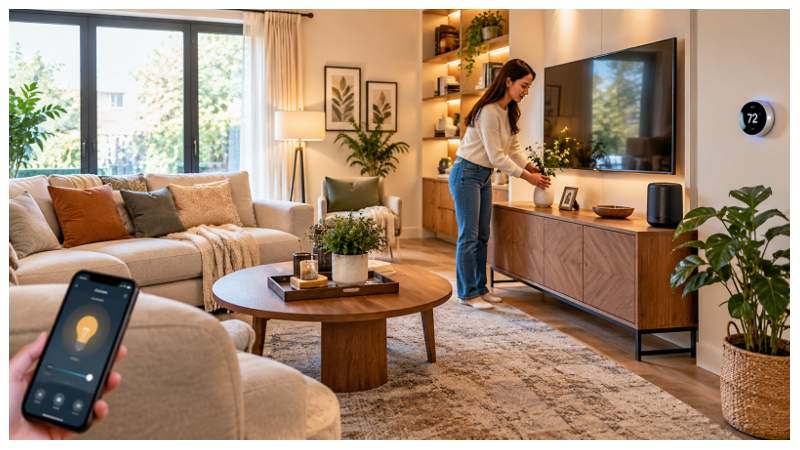
Technology should never make a home feel cold or complicated. Combine smart features with comfortable furniture, attractive décor, natural materials, and appropriate lighting.
A successful smart home feels like a comfortable home first and a technology system second.
4. Smart Lighting Ideas
Smart Bulbs and LED Lighting
Homeowners can choose lighting according to room function, mood, and daily routines.
Automated Lighting Schedules
Lighting schedules can automatically turn selected lights on or off at specific times. This can make daily routines easier while reducing the possibility of lights being left on unnecessarily.
Voice and App-Based Controls
Compatible lighting systems can often be managed through smartphone applications or voice commands. This provides convenient control without requiring users to manually operate every switch.
Creating Different Lighting Scenes
Different lighting scenes can be created for activities such as reading, relaxing, entertaining, or preparing meals.
Adjustable lighting can therefore support both functionality and atmosphere.
5. Smart Home Security Ideas
Smart Security Cameras
Intelligent security cameras let you watch specific zones in real time and send alerts when suspicious activity is noticed. Position cameras carefully and consider privacy when deciding where they should be installed.
Video Doorbells
Video doorbells can allow homeowners to view visitors and receive notifications. Some systems also support two-way communication.
They can provide additional convenience around entrances and deliveries.
Smart Locks
Smart locks can offer alternative ways to control access to a property. Depending on the model, users may have digital, code-based, or other access options.
Always consider backup entry methods and security features before installation.
Motion and Door Sensors
Motion and entry sensors can detect activity around selected areas. They can work alongside cameras and other security devices to provide broader awareness.
6. Smart Climate Control
Temperature sensors can help homeowners understand conditions in different rooms. This information can be useful when certain areas of a property feel warmer or cooler than others.
Automated Heating and Cooling
Automation can adjust climate settings according to programmed schedules or compatible conditions. Proper configuration is important to avoid unnecessary operation.
Improving Energy Efficiency
Smart controls can support more responsible energy use by reducing heating or cooling when it is not required. Actual savings depend on the equipment, settings, climate, and household habits.
7. Smart Kitchen Ideas
Connected Kitchen Appliances
Connected appliances can provide digital controls, notifications, and monitoring features. These functions can make kitchen routines more organized.
Smart Ovens and Cooking Technology
Some modern cooking appliances include programmable settings and connected controls. Homeowners should always follow safety instructions and manufacturer guidance.
Intelligent Refrigerators
Smart refrigerators may provide features such as alerts, monitoring, and organizational tools. Their value depends on whether those functions match the household’s needs.
Automated Kitchen Routines
Automation can simplify repetitive kitchen activities. The goal should be convenience without making basic household tasks unnecessarily complicated.
8. Smart Living Room Ideas
Connected Entertainment Systems
Smart televisions and streaming devices can bring entertainment services together in one convenient environment.
Smart Speakers and Voice Assistants
Connected speakers and voice assistants can provide hands-free control of compatible devices while also supporting music, information, and household routines.
Automated Curtains and Blinds
Motorized curtains and blinds can be scheduled or controlled digitally. They may also help manage daylight and privacy throughout the day.
Creating a Comfortable Smart Space
Combine technology with comfortable seating, organized cables, suitable lighting, and attractive décor. Smart features should support the room’s purpose rather than dominate its design.
9. Smart Bedroom Ideas
Automated Bedroom Lighting
Smart lighting can provide softer illumination during evening routines and brighter settings when needed in the morning.
Smart Alarm Systems
Connected alarm systems can provide scheduled alerts and integration with other compatible household devices.
Temperature and Comfort Controls
Smart temperature controls can help maintain preferred bedroom conditions according to household schedules.
Creating a Relaxing Smart Bedroom
Keep technology discreet and combine it with soft textiles, comfortable bedding, calming colors, and controlled lighting.
ction-id=”bh4jye” data-start=”8708″ data-end=”8731″>10. Smart Bathroom Ideas
s=”yoast-text-mark” data-section-id=”1cz4791″ data-start=”8733″ data-end=”8750″>>Smart Mirrors
Automated Lighting
Motion-activated or scheduled lighting can make bathroom use more convenient while helping reduce unnecessary illumination.
Water-Saving Technology
Smart or efficient water controls can help homeowners monitor and manage water consumption.
Modern Bathroom Convenience
Technology can complement practical bathroom improvements such as organized storage, good ventilation, suitable lighting, and easy-to-maintain surfaces.
11. Smart Cleaning Solutions
Robot Vacuum Cleaners
Robot vacuums can perform scheduled floor cleaning with limited manual intervention. They can be useful for maintaining routine cleanliness.
Smart Mopping Devices
Automated mopping devices can support regular floor maintenance. Always check whether a particular device is suitable for the flooring material.
Automated Cleaning Schedules
Scheduling cleaning devices allows them to operate at convenient times when rooms are less likely to be occupied.
Managing Cleaning Technology
Keep devices maintained by cleaning brushes, emptying containers, checking sensors, and following manufacturer instructions.
12. Energy-Saving Smart Home Ideas
Monitoring Household Energy Use
Energy-monitoring technology can help homeowners understand how electricity is being consumed. This information may highlight opportunities to reduce unnecessary use.
Smart Plugs and Power Controls
Smart plugs can provide digital control over compatible appliances and devices. Scheduling can help prevent selected equipment from operating longer than necessary.
Energy-Efficient Appliances
Combining efficient appliances with smart controls can support better household energy management.
Reducing Unnecessary Energy Consumption
Technology works best alongside simple habits such as switching off unused equipment, using efficient lighting, and maintaining appliances properly.
13. Smart Home Connectivity
Reliable Wi-Fi Networks
A dependable network is an important foundation for connected devices. Poor coverage can cause interruptions and unreliable controls.
Smart Home Hubs
Some smart home ecosystems use hubs to connect multiple devices. Before choosing one, check compatibility with the products you already own or plan to purchase.
Device Compatibility
Compatibility should be checked before buying new equipment. Products that use different communication standards or ecosystems may not work together as expected.
Managing Multiple Connected Devices
As the number of devices grows, organization becomes increasingly important. Keep track of applications, accounts, permissions, and device settings.
14. Privacy and Smart Home Security
Protecting Connected Devices
Connected devices should be configured with appropriate security settings. Avoid treating smart technology as automatically secure simply because it is new.
Creating Strong Passwords
Use strong and unique passwords for important accounts. Where supported, enable additional account protection.
Updating Smart Device Software
Regular software updates can improve functionality and address security issues. Check devices periodically for available updates.
Managing User Permissions
Review who can access your smart home accounts and devices. Remove unnecessary permissions and old user accounts when appropriate.
15. Budget-Friendly Smart Home Ideas
Affordable Smart Devices
You do not need an expensive system to begin. Smart bulbs, plugs, basic sensors, and other relatively simple devices can provide useful functionality.
Starting With Essential Technology
Choose one or two areas that need improvement. For example, begin with lighting if convenience is the priority or security devices if monitoring is more important.
Upgrading Your Home Gradually
A gradual approach allows homeowners to test products and understand what works before investing in additional technology.
Getting More Value From Existing Devices
Some existing appliances can gain smart functionality through compatible plugs or controls. Before replacing equipment, investigate whether an affordable upgrade can meet the same need.
16. Smart Home Ideas for Small Spaces
Compact Smart Devices
Small homes can benefit from compact devices that provide multiple functions without taking much physical space.
Space-Saving Technology
Wireless controls and wall-mounted equipment can reduce clutter. Select products that fit naturally into the existing layout.
Automated Storage and Organization
Smart labels, sensors, and organizational tools can support better household management without requiring large storage systems.
Making Small Homes More Efficient
Automation can be particularly helpful in compact spaces because it can reduce clutter and simplify everyday routines.
17. Sustainable Smart Home Technology
Smart Energy Management
Technology can help homeowners monitor consumption and create more efficient routines.
Water-Saving Devices
Efficient fixtures and monitoring tools can support responsible water use in kitchens, bathrooms, and outdoor areas.
Eco-Friendly Home Automation
Automation can reduce unnecessary operation of lights, climate systems, and selected appliances.
Choosing Long-Lasting Technology
Durability matters when purchasing connected products. Select devices from reliable manufacturers and consider maintenance, compatibility, and expected lifespan.
18. Common Smart Home Mistakes to Avoid
Buying Incompatible Devices
Always check compatibility before purchasing. A device that works independently may not integrate with your existing ecosystem.
Overcomplicating Your Smart Home
Too many devices can make management difficult. Build your system around actual household needs.
Ignoring Privacy and Security
Connected products can involve accounts, networks, cameras, microphones, or personal information. Review privacy and security settings carefully.
Spending Too Much on Unnecessary Features
Premium features are not always useful. Focus your budget on functions that provide meaningful benefits.
19. Future of Smart Home Technology
Artificial Intelligence and Home Automation
Artificial intelligence may make home systems increasingly capable of recognizing patterns and responding to household routines.
Personalized Smart Home Experiences
Future technology may allow greater customization based on individual preferences and schedules.
Advanced Energy Management
More sophisticated monitoring systems may provide homeowners with clearer information about energy use and opportunities for efficiency.
The Growth of Connected Homes
As more household products become connected, homeowners will have increasing opportunities to integrate lighting, security, climate, appliances, and entertainment.
20. How DecoratorAdvice Can Help
Practical Smart Home Inspiration
DecoratorAdvice can provide practical ideas for homeowners exploring smart technology and looking for ways to integrate it into everyday spaces.
Ideas for Different Home Styles
Smart technology can work with modern, traditional, minimalist, rustic, or eclectic interiors when devices are selected thoughtfully.
Technology Tips for Different Budgets
Smart homes do not need to be expensive. Homeowners can begin with affordable devices and expand their systems when useful.
Creating Comfortable and Functional Smart Spaces
The goal is to combine technology with good design. A smart home should remain comfortable, organized, attractive, and easy to use.
Conclusion
Final Thoughts on decoradtech Smart Home Ideas
Decoradtech smart home ideas by decoratoradvice offer practical ways to introduce technology into modern living spaces. From lighting and security to climate control, cleaning, entertainment, and energy management, connected devices can support many household needs.
Building a More Connected Home
A successful smart home starts with clear priorities. Choose compatible devices, create useful routines, and avoid adding technology simply for the sake of having more features.
Choosing Technology That Fits Your Lifestyle
The best smart home is one designed around real people and real routines. By selecting practical devices and maintaining appropriate security, homeowners can create connected spaces that are convenient without sacrificing comfort or simplicity.
FAQs
What are decoradtech smart home ideas by decoratoradvice?
They are practical smart home concepts covering connected lighting, security, climate control, appliances, cleaning technology, entertainment, energy management, and home automation.
What smart home devices should beginners consider?
Beginners can start with simple products such as smart bulbs, smart plugs, basic sensors, or compatible security devices. The best starting point depends on individual needs.
How can smart technology improve home comfort?
Smart technology can automate lighting, temperature controls, entertainment, and other routines, allowing homeowners to customize their environment more conveniently.
How can smart devices help save energy?
Scheduling, monitoring, and automated controls can reduce unnecessary operation of lights, appliances, and heating or cooling equipment. Results depend on how the devices are configured and used.
How can I make my smart home more secure?
Use strong unique passwords, enable available security features, keep software updated, review user permissions, and secure the network connecting your smart devices.